The 24-Hour Meme-to-Merch Pipeline: Pop Culture Fast Fashion
Advertisements
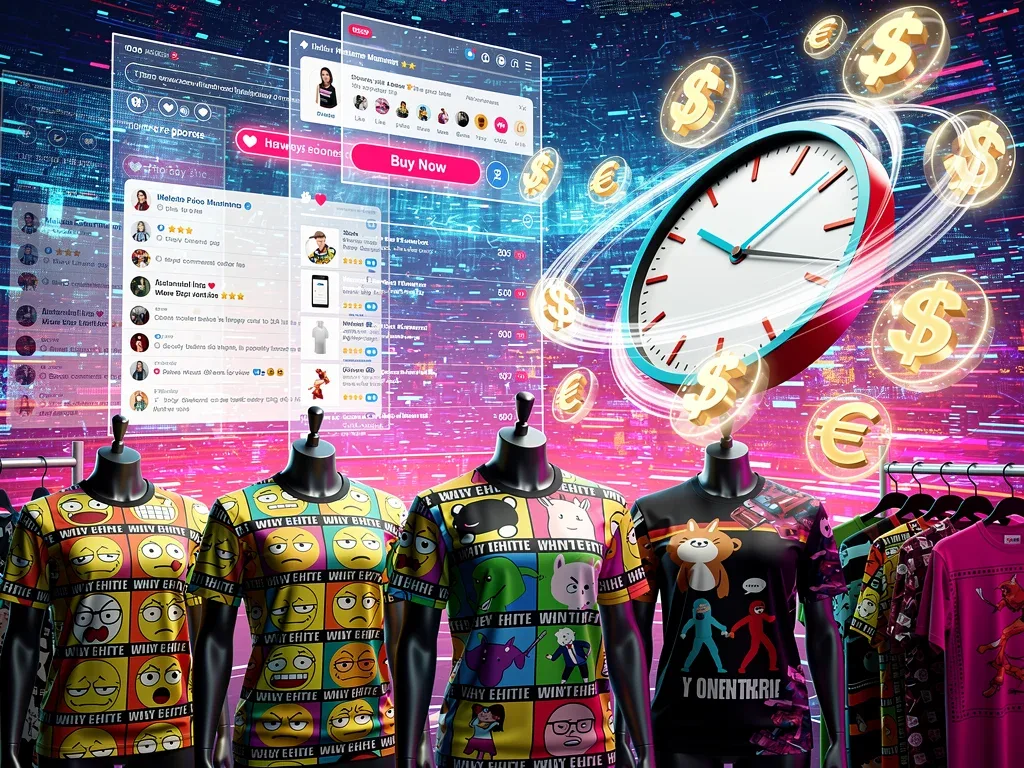
The 'meme to merch pipeline' is a phenomenon where viral internet content rapidly converts into consumer products, driving significant revenue within hours, fundamentally altering pop culture consumption and fast fashion dynamics.
In an era defined by instantaneous information and fleeting trends, the 24-hour meme-to-merch pipeline: how pop culture fast fashion generates millions overnight has become a powerful, albeit often overlooked, force in the retail landscape. This rapid transformation of viral internet moments into tangible consumer products represents a fascinating intersection of digital culture, e-commerce, and fast fashion, reshaping how we consume and express our connection to popular trends.
Understanding the Meme-to-Merch Phenomenon
The concept of the meme-to-merch pipeline is relatively new, born from the accelerated pace of internet culture and the agility of modern manufacturing. It describes the process by which an image, video, phrase, or idea gains widespread virality online, only to be almost immediately commodified into physical goods like t-shirts, mugs, or accessories.
This phenomenon isn't just about capitalizing on trends; it's about speed, relevance, and a deep understanding of digital communities. The success of this pipeline hinges on capturing the zeitgeist at its peak, transforming fleeting digital moments into sellable items before their cultural relevance fades. It's a testament to the power of collective online engagement and the entrepreneurial spirit of those quick enough to react.
The Genesis of Viral Trends
Viral trends often originate from unexpected sources, ranging from obscure social media posts to clips from major television shows or even political gaffes. What makes them potent for the meme-to-merch pipeline is their ability to resonate broadly and be easily shareable.
- Organic Virality: Many memes spread naturally through user-generated content and shares.
- Cultural Resonance: The most successful memes tap into shared experiences or humor.
- Ease of Replication: Simple, adaptable formats allow for quick variations and widespread adoption.
Once a trend gains sufficient traction, its potential for merchandise becomes apparent. The critical window for monetization is often measured in hours, not days or weeks, pushing creators and manufacturers to operate at unprecedented speeds. This rapid response mechanism is what differentiates the meme-to-merch pipeline from traditional fashion cycles.
In conclusion, the meme-to-merch pipeline is a dynamic ecosystem fueled by internet virality and rapid commercialization. Its foundation lies in the quick identification and transformation of culturally relevant digital content into physical products, operating on a timeline that challenges conventional retail models.
The Mechanics of Rapid Production and Distribution
The ability to convert a viral moment into a physical product within 24 hours relies on highly streamlined and adaptable production and distribution networks. This isn't your grandmother's manufacturing process; it's a testament to technological advancements and agile business models.
At the heart of this rapid turnaround are print-on-demand services and dropshipping models. These technologies eliminate the need for large inventories and upfront investments, allowing entrepreneurs to test the market with minimal risk and scale up production almost instantly once a meme takes off.
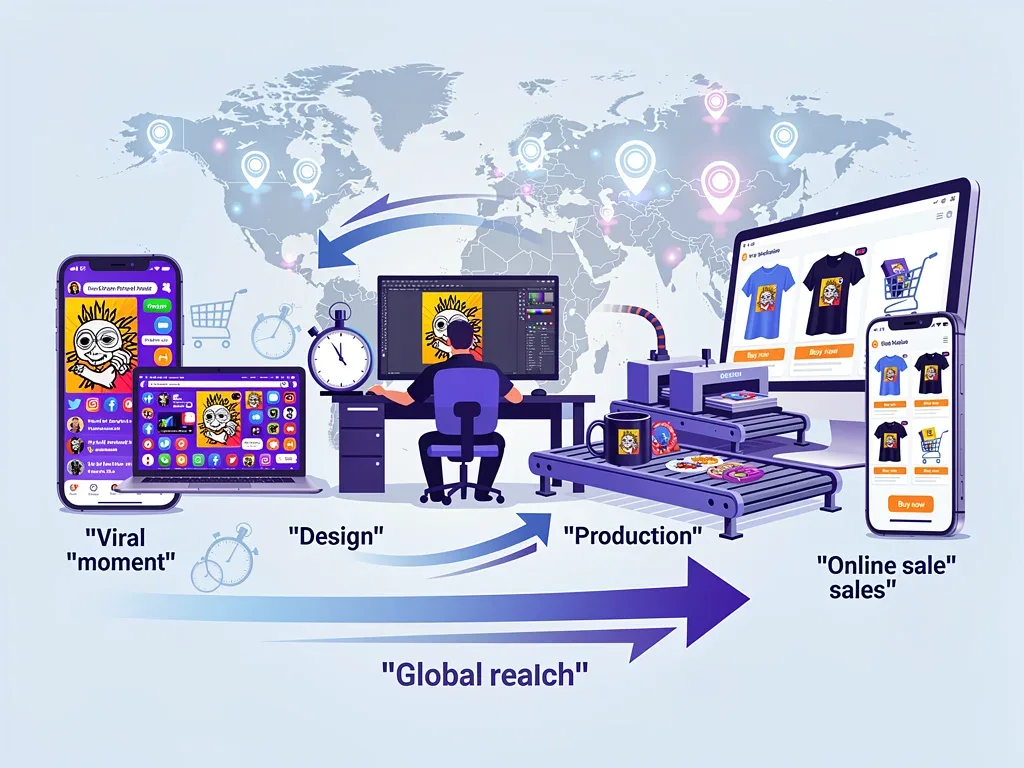
Print-on-Demand and Dropshipping
Print-on-demand (POD) platforms allow designs to be printed onto products only after an order is placed. This means no wasted inventory, no storage costs, and the flexibility to offer an endless array of designs without commitment. Dropshipping further enhances this efficiency by allowing third-party suppliers to handle storage and shipping directly to the customer.
The synergy between POD and dropshipping creates an incredibly efficient system:
- Zero Inventory Risk: Products are only created when purchased.
- Global Reach: Suppliers can ship directly to customers worldwide.
- Scalability: Production can easily increase or decrease based on demand.
This operational model is perfectly suited for the ephemeral nature of internet trends, allowing businesses to ride the wave of virality before it crashes. The low barrier to entry also means that almost anyone with a good design idea and an understanding of internet culture can participate.
Distribution is equally critical. Social media platforms themselves often serve as the primary marketing and sales channels, with influencers and viral posts directly linking to product pages. This direct-to-consumer approach further accelerates the sales cycle, bypassing traditional retail bottlenecks.
In essence, the rapid production and distribution of meme merchandise are driven by innovative e-commerce solutions that prioritize speed, flexibility, and minimal overhead. These mechanics are fundamental to the success of the meme to merch pipeline.
Marketing in the Age of Instant Gratification
Marketing within the meme-to-merch pipeline is a masterclass in leveraging social media and understanding digital consumer behavior. It’s not about traditional ad campaigns; it’s about authentic engagement and instantaneous response.
The success of these products often hinges on marketing that feels organic and native to the platforms where the memes originate. This means utilizing influencer marketing, engaging directly with online communities, and creating a sense of urgency around limited-time drops.
Leveraging Social Media Platforms
Social media is not just where memes are born; it's where they are sold. Platforms like TikTok, Instagram, and X (formerly Twitter) provide fertile ground for both the creation and commercialization of viral content. Businesses and individuals capitalize on trending hashtags, audio, and visual formats to promote their meme-inspired products.
- Influencer Collaborations: Partnering with creators who have large, engaged audiences.
- Viral Challenges: Creating interactive content that features the merchandise.
- Community Engagement: Participating in conversations where the meme is relevant.
The marketing strategy is often less about explicit advertising and more about integrating the product seamlessly into the ongoing digital conversation. When a meme is still hot, seeing merchandise related to it feels like a natural extension of the viral moment, rather than an intrusive advertisement. This creates a powerful emotional connection with potential buyers.
Moreover, the sense of immediacy is paramount. Many successful meme-to-merch drops are presented as limited editions or available for a short time, capitalizing on FOMO (Fear Of Missing Out) to drive rapid sales. This strategy aligns perfectly with the fleeting nature of internet trends, encouraging impulse purchases before the meme's relevance wanes.
Effective marketing in this space requires constant vigilance and an ability to pivot quickly, ensuring that products are promoted while the meme is still at its cultural peak, making the meme to merch pipeline incredibly dynamic.
The Economics: Generating Millions Overnight
The financial figures associated with the meme-to-merch pipeline can be staggering, with some viral moments translating into millions of dollars in sales within a mere 24 hours. This rapid monetization challenges conventional economic models and highlights the immense purchasing power of digitally engaged consumers.
The key to these rapid earnings lies in the confluence of high demand, low production costs (thanks to POD), and efficient direct-to-consumer sales channels. When a meme goes viral, it creates an instant, massive, and highly targeted audience ready to purchase.
Case Studies of Viral Success
Numerous examples illustrate the lucrative nature of this pipeline. From simple phrases like "Okay Boomer" to specific images or reactions, the right meme at the right time can become a goldmine. These successes often start with a single, well-timed product launch that resonates deeply with a viral moment.
Consider the "Stonks" meme or specific reactions from popular Twitch streamers. Merchandise featuring these elements can sell out almost instantly. The revenue generated isn't just from individual sales; it's from the sheer volume and speed at which these items are moved.
- Low Overhead: Minimal upfront investment due to print-on-demand.
- High Demand: Instant, widespread interest from a global audience.
- Rapid Turnover: Quick sales cycles before trends cool off.
The economic model is inherently high-risk, high-reward. While some ventures hit it big, many attempts to capitalize on memes fall flat if the trend doesn't catch on or if the execution is too slow. However, the potential for massive, rapid returns makes it an attractive space for nimble entrepreneurs and brands.
Furthermore, the data collected from these quick sales can be incredibly valuable, offering real-time insights into consumer preferences and the lifespan of digital trends. This information can then inform future marketing and product development strategies, refining the meme to merch pipeline for even greater efficiency.
Impact on Pop Culture and Fast Fashion
The meme-to-merch pipeline has had a profound impact on both pop culture and the fast fashion industry. It has blurred the lines between digital content and physical goods, making consumption an immediate extension of online engagement. This phenomenon accelerates trend cycles to an unprecedented degree.
For pop culture, it means that moments of collective experience are not just shared; they are worn, displayed, and consumed in tangible ways, often within hours of their viral inception. This creates a more immersive and interactive relationship between fans and the content they love.
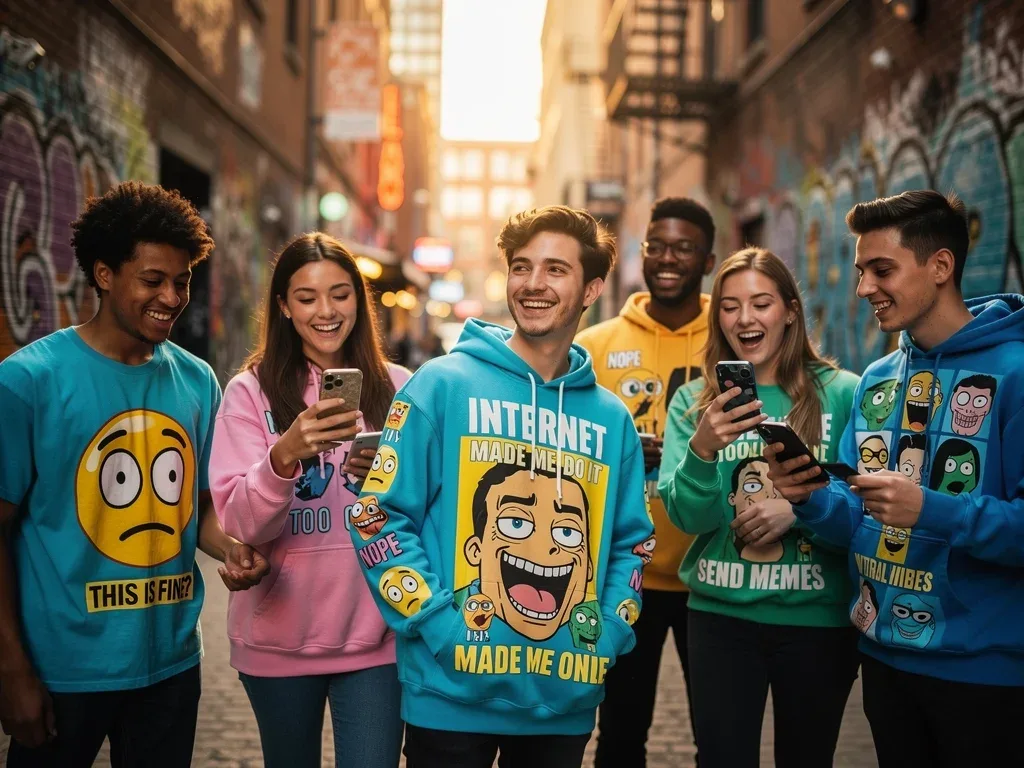
Shifting Consumer Expectations
The speed of the meme-to-merch pipeline has fundamentally altered consumer expectations. People now anticipate that anything viral will quickly be available as merchandise. This creates pressure on traditional fashion brands to adapt or risk being seen as slow and out of touch.
- Instant Gratification: Consumers expect immediate access to trending products.
- Personalized Expression: Memes offer a unique way for individuals to express identity.
- Participatory Culture: Buying merch is a way to participate in a viral moment.
For the fast fashion industry, this pipeline represents both a challenge and an opportunity. While traditional fast fashion already operates on accelerated cycles, the meme-to-merch model pushes these limits even further. It forces brands to reconsider their design, production, and marketing timelines, emphasizing agility and real-time responsiveness.
Moreover, it raises questions about sustainability and ethical production, as the demand for rapid turnaround can exacerbate existing issues within the fast fashion supply chain. However, the print-on-demand model, by minimizing waste, also offers a potential silver lining, suggesting that speed and sustainability aren't always mutually exclusive.
Ultimately, the impact is a more dynamic, responsive, and sometimes chaotic marketplace where cultural relevance is the ultimate currency, driven by the relentless pace of the meme to merch pipeline.
Challenges and the Future of the Pipeline
While the meme-to-merch pipeline offers incredible opportunities, it is not without its challenges. The fleeting nature of trends, intellectual property concerns, and the sheer volume of content vying for attention all pose significant hurdles for those operating in this space.
The future of this pipeline will likely involve more sophisticated trend prediction, better intellectual property management, and an increasing focus on sustainable practices as the industry matures and faces greater scrutiny.
Navigating Intellectual Property and Trend Fatigue
One of the biggest challenges is intellectual property. Many memes incorporate copyrighted material, leading to legal gray areas for those who seek to monetize them. Determining ownership and obtaining rights in a 24-hour window is often impossible, leading to a landscape fraught with potential legal issues.
Furthermore, the rapid cycle of trends can lead to consumer fatigue. What's hilarious today might be irrelevant tomorrow, making long-term planning difficult. Businesses must constantly innovate and stay ahead of the curve to remain relevant.
- IP Litigation: Risk of legal action for unauthorized use of content.
- Short Lifespan: Memes quickly lose relevance, impacting product demand.
- Market Saturation: Over-commercialization can dilute a meme's appeal.
Looking ahead, we can expect to see more advanced AI-driven trend forecasting tools that can predict which memes have the highest potential for merchandising. There will also likely be a move towards more official collaborations between meme creators and merchandise producers, offering a clearer path for ethical and legal monetization.
The push for sustainability will also grow, with an emphasis on eco-friendly materials and production processes to mitigate the environmental impact of rapid consumption. The meme to merch pipeline is still evolving, and its future will be shaped by how effectively these challenges are addressed and new technologies are integrated.
| Key Aspect | Brief Description |
|---|---|
| Rapid Conversion | Viral internet trends are quickly transformed into physical consumer products. |
| Agile Production | Utilizes print-on-demand and dropshipping for speed and low inventory risk. |
| Instant Marketing | Leverages social media for organic promotion and direct-to-consumer sales. |
| Economic Impact | Generates significant revenue rapidly, challenging traditional retail models. |
Frequently Asked Questions About the Meme-to-Merch Pipeline
What is the 'meme to merch pipeline'?▼The 'meme to merch pipeline' describes the rapid process of converting viral internet content, such as memes, into physical consumer products like apparel or accessories. This transformation often occurs within a 24-hour window, capitalizing on the peak of a trend's popularity to generate quick sales.
How do companies achieve such fast production?▼Companies achieve rapid production through agile business models like print-on-demand (POD) and dropshipping. POD services create products only after an order is placed, eliminating inventory. Dropshipping allows third-party suppliers to handle storage and shipping, further streamlining the process and reducing lead times significantly.
What are the main marketing strategies used?▼Marketing primarily leverages social media platforms where memes originate. Strategies include influencer collaborations, viral challenges, and direct community engagement. The goal is to integrate products seamlessly into ongoing digital conversations, creating a sense of urgency and capitalizing on the authentic, organic spread of the meme itself.
Can anyone participate in the meme-to-merch pipeline?▼Yes, the low barrier to entry, thanks to print-on-demand and dropshipping services, means that individuals and small businesses can easily participate. With a compelling design, an understanding of viral trends, and effective social media promotion, anyone can attempt to monetize a popular meme.
What are the ethical considerations of this trend?▼Ethical considerations include intellectual property rights, as many memes use copyrighted material without permission. There are also concerns about sustainability within fast fashion, although print-on-demand models can mitigate waste. The rapid consumption cycle also raises questions about the overall environmental impact of fleeting trends.
Conclusion
The 24-hour meme-to-merch pipeline stands as a potent symbol of our hyper-connected, fast-paced digital age. It exemplifies how fleeting online moments can translate into substantial economic value, reshaping consumer behavior and challenging traditional retail paradigms. While offering unprecedented opportunities for rapid monetization and cultural expression, this phenomenon also brings forth critical discussions around intellectual property, sustainability, and the long-term impact of accelerated consumption. As internet culture continues to evolve, so too will this pipeline, demanding constant adaptation and innovation from those who seek to navigate its dynamic currents.
