WhatsApp Channels vs. Telegram Broadcasts: 3x Better CTR Today?
Advertisements
WhatsApp Channels and Telegram Broadcasts present distinct communication avenues for businesses and creators, with recent analyses indicating significant differences in click-through rates influenced by platform features and user behavior.
In the dynamic landscape of digital communication, businesses and content creators are constantly seeking the most effective channels to reach their audiences. The perennial debate of WhatsApp Channels vs. Telegram Broadcasts: Which Platform Delivers 3x Better Click-Through Rates Today? has become a focal point for strategists aiming to maximize engagement and conversions. Understanding the nuances of each platform is paramount for crafting successful outreach campaigns.
Understanding the Core Functionality: Channels and Broadcasts
Both WhatsApp Channels and Telegram Broadcasts serve a similar primary purpose: enabling one-to-many communication. They allow administrators to send messages, media, and updates to a large audience without revealing individual subscriber identities. This feature is invaluable for businesses, news outlets, and public figures who need to disseminate information efficiently. However, their underlying architectures and feature sets diverge significantly, impacting how users interact with the content and, consequently, the click-through rates (CTR).
Telegram, a pioneer in this space, introduced its 'Channels' feature much earlier than WhatsApp. This head start allowed Telegram to refine its offerings and build a robust ecosystem around broadcast messaging. WhatsApp, on the other hand, leveraged its massive global user base when it finally rolled out 'Channels,' aiming to integrate this functionality seamlessly into an already familiar interface. The distinction in their evolution plays a crucial role in current user expectations and engagement patterns.
Telegram Channels: A Feature-Rich Environment
Telegram Channels are known for their rich feature set, offering a high degree of customization and control for administrators. This includes features that directly influence message visibility and engagement.
Unlimited Subscribers: Telegram Channels can host an unlimited number of subscribers, making them ideal for large-scale broadcasts.
Detailed Analytics: Administrators get access to comprehensive analytics, including message views, shares, and reactions, which are vital for optimizing content.
Public and Private Channels: Flexibility to create public channels discoverable through search or private channels accessible via invitation links.
Scheduled Messages: The ability to schedule messages in advance allows for better content planning and consistent delivery.
The extensive feature set of Telegram Channels empowers administrators to create highly engaging and interactive content. This can lead to higher perceived value for subscribers, potentially translating into better CTRs if the content is compelling and calls to action are clear. The platform's emphasis on privacy and user control also attracts a specific demographic that might be more receptive to direct communication.
In conclusion, Telegram's long-standing presence and feature-rich environment have cultivated a user base accustomed to diverse broadcast functionalities. This established ecosystem often provides administrators with more tools to experiment and optimize their messaging strategies, which can be a significant factor in achieving higher engagement metrics.
WhatsApp Channels: The Power of Ubiquity
WhatsApp's entry into the channels space brought with it the unparalleled advantage of its colossal user base. With billions of users worldwide, WhatsApp Channels immediately offered an enormous potential reach. However, the platform's initial approach to channels was more streamlined, focusing on simplicity and ease of use, which might influence engagement differently compared to Telegram.
The integration of Channels within the familiar WhatsApp interface means users don't need to download a new app or learn a new navigation system. This low barrier to entry can lead to rapid adoption, but it also means channels compete for attention within a personal messaging app, where users are primarily interacting with friends and family. This context is critical when evaluating potential CTRs.
Key Characteristics of WhatsApp Channels
Massive User Base: Instant access to a vast global audience, potentially including users who might not be on Telegram.
Seamless Integration: Channels appear within the 'Updates' tab, separate from personal chats, but still within the familiar app environment.
Privacy-Focused: Designed to protect the privacy of both administrators and followers, with phone numbers and profile pictures hidden.
Limited Interactivity: Initially, channels offered fewer interactive features compared to Telegram, focusing more on one-way communication.
The strength of WhatsApp Channels lies in its sheer reach. For businesses targeting a broad, less tech-savvy audience, WhatsApp can be an incredibly effective tool. The challenge, however, is to cut through the noise in an app primarily used for personal communication. The platform's more constrained feature set for channels, particularly in terms of advanced analytics and interactive elements, might require different content strategies to achieve high CTRs.
Ultimately, WhatsApp Channels benefit from the platform's ubiquity, offering a direct line to billions of users. The success of a channel often hinges on its ability to deliver concise, valuable content that resonates quickly with an audience accustomed to fast-paced personal interactions.
Click-Through Rate Dynamics: What Drives Engagement?
When comparing WhatsApp Channels vs. Telegram Broadcasts for CTR, it's essential to understand the factors that drive engagement on each platform. CTR is not merely a number; it reflects the effectiveness of your message, the relevance of your content, and the overall user experience. Several elements contribute to whether a user clicks on a link within a broadcast message.
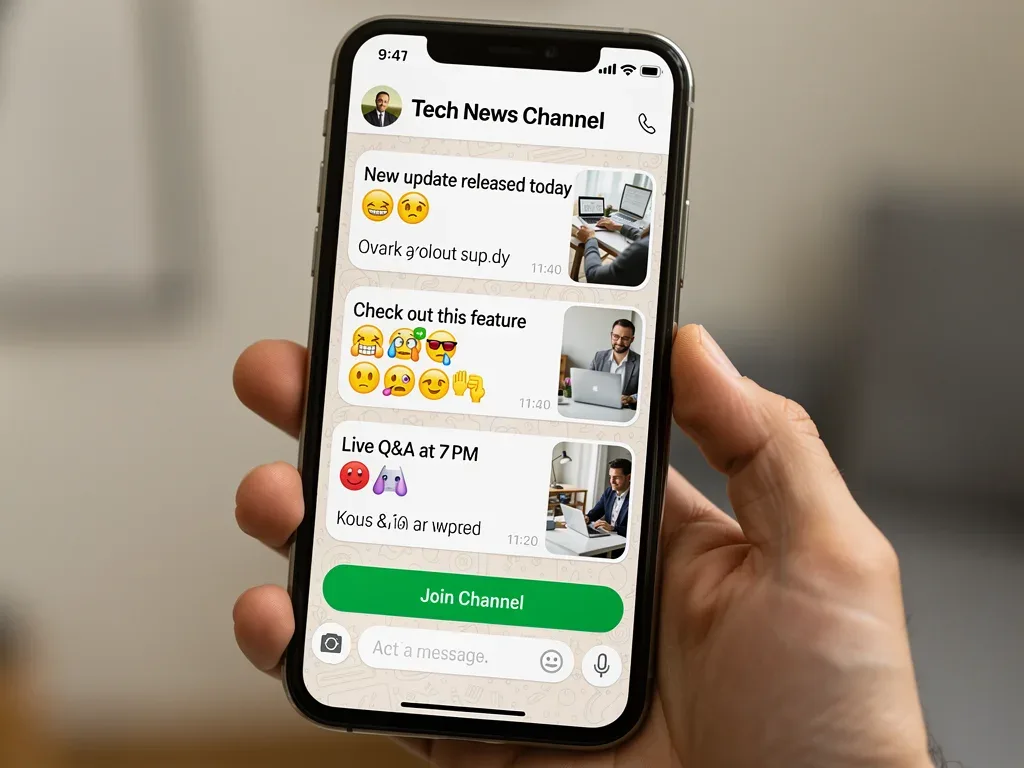
On Telegram, the platform's more advanced formatting options, including rich media previews, instant view articles, and interactive polls, can significantly enhance the appeal of a message. Subscribers are often more accustomed to receiving diverse content types, and the platform's analytics provide administrators with insights to fine-tune their approach. The ability to react to messages and comment in linked discussion groups also fosters a sense of community, potentially increasing engagement.

Factors Influencing CTR on Each Platform
The distinct characteristics of each platform lead to different strategies for maximizing CTR.
Content Quality and Relevance: Irrespective of the platform, compelling and relevant content is the primary driver of clicks.
Call to Action (CTA) Clarity: A clear, concise, and prominent CTA significantly impacts whether a user takes the desired action.
Audience Demographics: The age, tech-savviness, and geographic location of your audience can influence their preferred platform and response to messages.
Message Frequency and Timing: Sending too many messages or at inconvenient times can lead to unsubscribes or ignored content, lowering CTR.
For WhatsApp Channels, given its more personal context, messages need to be highly curated and offer immediate value. Users are less likely to tolerate irrelevant or overly promotional content. The simplicity of the interface means CTAs need to be direct and easily identifiable. On Telegram, while content still needs to be high-quality, the user base might be more receptive to longer-form content or more complex interactive elements due to the platform's design for diverse content consumption.
In essence, achieving a high CTR on either platform requires a deep understanding of the platform's specific strengths and weaknesses, coupled with an acute awareness of your audience's expectations and behaviors. The '3x better' claim often comes down to how well these elements are aligned.
The 3x Better Click-Through Rate Claim: Debunking or Confirming?
The bold assertion that one platform delivers a '3x better click-through rate' is a significant claim that warrants careful examination. Such statements often emerge from specific case studies or anecdotal evidence, which may not be universally applicable. To truly assess this, we need to look beyond raw numbers and consider the context, methodology, and target audience of any reported CTR.
One common scenario where Telegram might show higher CTRs is with tech-savvy audiences or communities built around niche interests. These users are often more engaged with the platform's advanced features and are accustomed to receiving more detailed information. If a business targets this demographic, Telegram's rich media and interactive options could indeed lead to superior engagement.
Conversely, for broader consumer-facing campaigns, especially in regions where WhatsApp dominates, the sheer volume of WhatsApp users could mean that even a slightly lower percentage CTR on WhatsApp translates to a higher absolute number of clicks. However, the '3x better' claim suggests a proportional advantage, which implies a significantly more effective engagement model, not just a larger audience.
Analyzing Potential Discrepancies
Audience Segmentation: Different audiences respond to different platforms. A younger, tech-oriented demographic might engage more on Telegram, while a general population might prefer WhatsApp due to familiarity.
Content Format: Highly visual or interactive content might perform better on Telegram due to its superior media handling and formatting options.
Call to Action Placement: The prominence and clarity of the CTA within the message can drastically alter CTR, and placement opportunities differ between platforms.
Trust and Authority: Users are more likely to click on content from channels they trust. Building this trust takes time and consistent, valuable communication on any platform.
It's plausible that in specific niches or with particular content strategies, one platform could indeed outperform the other significantly. For instance, a tech news channel might see higher CTRs on Telegram because its audience actively seeks in-depth articles and is comfortable with the platform's interface for consuming such content. A local business sending promotional offers might find WhatsApp more effective due to its widespread use and immediate visibility.
Therefore, claiming a universal '3x better' CTR without specifying the context can be misleading. The actual performance is highly dependent on the strategic alignment of content, audience, and platform capabilities. Marketers should conduct their own A/B testing and performance analysis tailored to their specific goals and target markets.
Strategic Advantages of Each Platform for Marketers
Marketers looking to leverage messaging platforms for communication must critically evaluate the strategic advantages offered by both WhatsApp Channels and Telegram Broadcasts. The choice isn't simply about which platform has more users, but rather which one aligns best with specific marketing objectives, audience demographics, and content types. Each platform provides unique benefits that can be harnessed for optimal results.
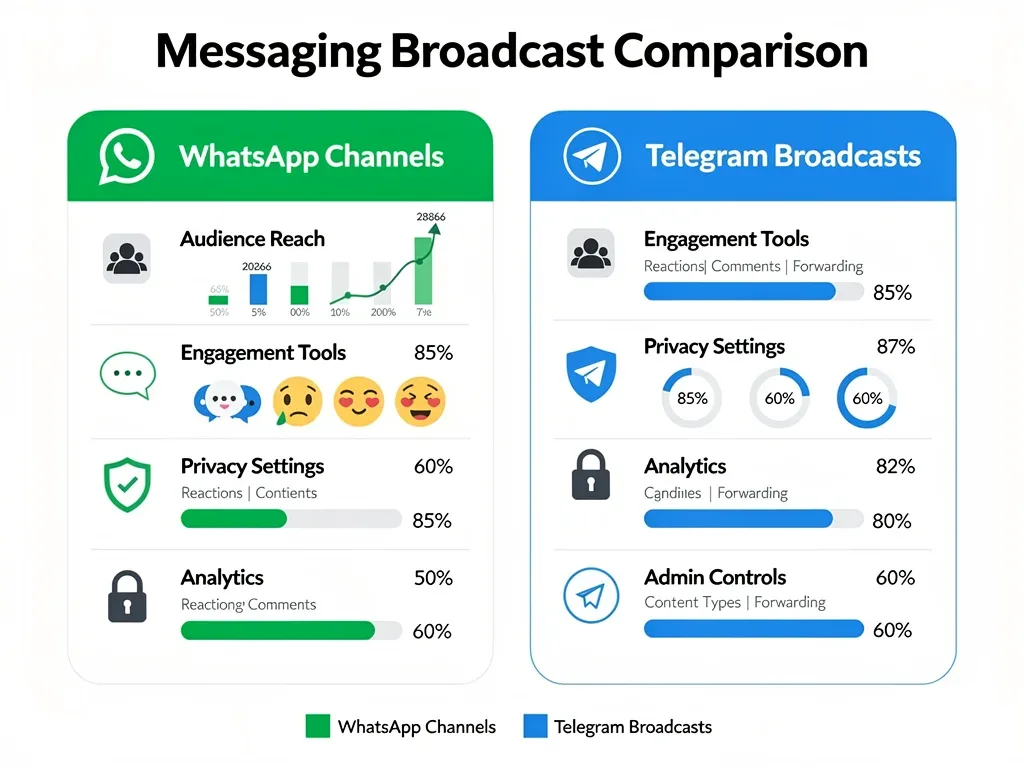
Telegram's established feature set and more liberal approach to content management give marketers greater creative freedom. This includes the ability to create highly stylized messages, integrate bots for interactive experiences, and manage large communities with advanced administrative tools. For brands that prioritize rich content experiences, community building, and detailed performance tracking, Telegram often presents a more robust solution. It allows for a more nuanced approach to content marketing, where the depth and quality of engagement can be paramount.

Leveraging Platform Strengths
WhatsApp for Broad Reach and Simplicity: Ideal for campaigns requiring maximum audience penetration with straightforward messages and calls to action.
Telegram for Niche Communities and Rich Content: Best suited for engaging specific interest groups with detailed information, multimedia, and interactive elements.
Direct Communication: Both platforms offer a direct line to subscribers, bypassing traditional ad blockers and email spam filters.
Cost-Effectiveness: Both channels are generally more cost-effective for broadcasting messages compared to paid advertising, especially for organic reach.
WhatsApp, on the other hand, excels in its unparalleled reach and the immediate, personal nature of its communication. For businesses focusing on transactional messages, customer support, or quick updates that require immediate attention from a broad audience, WhatsApp Channels can be incredibly powerful. The platform's strong association with personal communication can also foster a sense of intimacy and trust, if managed correctly, leading to high open rates and potentially good CTRs for time-sensitive offers or announcements.
Ultimately, a savvy marketer might not choose one over the other but rather integrate both into a comprehensive strategy. Using WhatsApp for mass-market announcements and Telegram for deeper engagement with a more dedicated segment of the audience can yield synergistic results, maximizing both reach and the quality of interaction.
Best Practices for Maximizing CTR on Both Platforms
Regardless of whether you choose WhatsApp Channels or Telegram Broadcasts, adopting best practices is crucial for maximizing your click-through rates. A high CTR is a direct indicator that your content is resonating with your audience and that your calls to action are effective. Generic messaging rarely achieves outstanding results; personalization, relevance, and strategic delivery are key.
For both platforms, understanding your audience is the foundational step. What are their pain points? What kind of content do they prefer? When are they most active? Answering these questions will inform your content strategy, message frequency, and even the tone of your communication. Without this deep understanding, even the most well-crafted message can fall flat.
Universal Strategies for Enhanced Engagement
There are several overarching strategies that apply to both WhatsApp Channels and Telegram Broadcasts to improve CTR.
Segment Your Audience: Even within a single channel, consider segmenting your audience to send more targeted and relevant messages.
A/B Test Your Content: Experiment with different headlines, images, CTAs, and message lengths to see what performs best.
Provide Value Consistently: Don't just promote; offer exclusive content, insights, or deals that make subscribing worthwhile.
Optimize for Mobile: Ensure all links and landing pages are mobile-friendly, as most users will access content on their smartphones.
Monitor Analytics: Regularly review performance data to understand what's working and what's not, and adjust your strategy accordingly.
On Telegram, leverage its rich media capabilities by incorporating engaging videos, high-quality images, and interactive polls. Use the 'Instant View' feature for articles to provide a seamless reading experience without leaving the app. For WhatsApp, focus on brevity and clarity. Use emojis judiciously to add personality and break up text, and ensure your call to action is immediately visible and compelling within the first few lines of the message.
Another crucial best practice is to respect user privacy and avoid spamming. Overly frequent or irrelevant messages are the quickest way to lose subscribers and damage your brand's reputation. Maintaining a balance between staying top-of-mind and respecting user boundaries is vital for long-term engagement and sustainable CTRs.
Future Trends and Platform Evolution
The landscape of messaging platforms is constantly evolving, with both WhatsApp and Telegram continuously introducing new features and refining existing ones. Understanding these future trends and anticipated platform evolutions is crucial for marketers and content creators to stay ahead and maintain optimal click-through rates. What works today might not be as effective tomorrow, necessitating a flexible and forward-thinking strategy.
WhatsApp, under Meta's umbrella, is likely to further integrate its ecosystem, potentially bringing more commerce and business-centric features to Channels. This could include enhanced payment functionalities, direct product catalogs, and more sophisticated CRM integrations. Such developments would significantly impact how businesses interact with customers, potentially driving higher transactional CTRs as the path from discovery to purchase becomes shorter and more integrated.
Telegram, known for its innovation and user-centric features, will probably continue to push the boundaries of what's possible with broadcast messaging. We might see even more advanced interactive elements, deeper analytics, and potentially new monetization models for channel owners. Its focus on privacy and open-source development also suggests a continued appeal to users who prioritize these aspects, influencing the types of content and engagement strategies that thrive on the platform.
Anticipated Developments
Enhanced Monetization Options: Both platforms are exploring ways for creators and businesses to monetize their channels, which could incentivize higher quality content.
AI-Powered Personalization: The integration of AI could lead to more personalized content delivery, increasing relevance and CTRs.
Increased Interactivity: Expect more sophisticated polls, quizzes, and direct feedback mechanisms within channels.
Cross-Platform Integrations: Deeper integrations with other social media and business tools could streamline content creation and distribution.
The competition between WhatsApp Channels and Telegram Broadcasts will likely spur both platforms to innovate further, benefiting users and marketers alike. The key for anyone utilizing these channels will be to remain agile, experiment with new features as they roll out, and continuously adapt their content and engagement strategies based on performance data and evolving user behaviors. The '3x better' claim might shift as these platforms mature and introduce new capabilities, making continuous learning and adaptation indispensable for success.
Key Aspect | Description |
|---|---|
Audience Reach | WhatsApp boasts a larger global user base, while Telegram excels with tech-savvy and niche communities. |
Content Features | Telegram offers rich media, advanced formatting, and interactive elements. WhatsApp focuses on simplicity. |
CTR Drivers | Content quality, clear CTAs, audience relevance, and timing are critical for high CTR on both platforms. |
Strategic Use | WhatsApp for mass updates, Telegram for deeper engagement and community building. |
Frequently Asked Questions About Messaging Channels
What is the main difference between WhatsApp Channels and Telegram Broadcasts?▼
The primary distinction lies in their feature sets and user bases. Telegram offers more advanced customization, rich media options, and detailed analytics, appealing to tech-savvy users. WhatsApp leverages its vast global reach and simpler interface, integrating channels within a familiar personal messaging environment.
Which platform generally has a higher click-through rate?▼
There's no universal answer; CTR varies significantly by audience, content, and strategy. Telegram might show higher engagement for niche, tech-oriented content due to its features. WhatsApp's sheer user volume can lead to high absolute clicks, even if percentage CTR is sometimes lower for general broadcasts. Specific studies are needed for accurate comparisons.
How can I improve my channel's click-through rate on either platform?▼
To boost CTR, focus on creating highly relevant and valuable content, use clear and compelling calls to action, optimize message timing, and regularly analyze your channel's performance data. A/B testing different message formats and subject lines can also provide valuable insights into what resonates with your audience.
Are there any privacy concerns with using these broadcast channels?▼
Both platforms prioritize user privacy. WhatsApp Channels hide administrators' and followers' phone numbers and profile pictures. Telegram also offers similar privacy features, allowing anonymous broadcasting. However, users should always be mindful of the content they share and the links they click, as with any online communication.
Should businesses use both WhatsApp Channels and Telegram Broadcasts?▼
Many businesses benefit from a dual-platform strategy. WhatsApp can be effective for broad announcements and reaching a general audience due to its ubiquity. Telegram is often better for engaging niche communities, delivering rich multimedia content, and fostering deeper interaction. The optimal approach depends on your target audience and marketing objectives.
Conclusion: Strategic Choice for Optimal Engagement
The debate surrounding WhatsApp Channels vs. Telegram Broadcasts: Which Platform Delivers 3x Better Click-Through Rates Today? ultimately underscores the importance of a data-driven, audience-centric approach to digital communication. While Telegram's robust feature set and early adoption by tech-savvy users can lead to impressive engagement in specific niches, WhatsApp's unparalleled global reach offers a direct line to a massive, diverse audience. The '3x better' claim is not a universal truth but rather a testament to the fact that performance is highly contextual, influenced by content quality, audience demographics, and strategic execution. Marketers must move beyond generic comparisons and instead focus on understanding their specific goals and target audience to leverage each platform's unique strengths effectively. By adopting best practices, continually analyzing performance, and adapting to evolving platform features, businesses can optimize their communication strategies to achieve outstanding click-through rates and foster meaningful engagement, regardless of the chosen channel.
