Stop Bedtime Screen Scrolling: 3 Nightstand Swaps for Better Sleep
Advertisements
To stop bedtime screen scrolling and restore 8 full hours of rest, strategically replace digital devices on your nightstand with analog alternatives that promote relaxation and prepare your body for deep, restorative sleep every night.
Are you tired of waking up groggy, feeling like you barely slept, all because of that endless scroll before bed? The modern addiction to smartphones and tablets has infiltrated our bedrooms, turning what should be a sanctuary of rest into a hub of digital distraction. If you're ready to reclaim your nights and finally experience the deep, restorative sleep you deserve, it's time to learn how to stop bedtime screen scrolling. This article will guide you through three simple yet powerful nightstand swaps that can profoundly impact your sleep quality, helping you achieve those coveted eight full hours of rest.
The Silent Saboteur: How Screens Ruin Your Sleep
The allure of digital screens before bed is undeniable. One quick check of social media often turns into an hour-long scroll, pushing back your sleep time and disrupting your body's natural rhythms. This seemingly harmless habit has far-reaching consequences for your sleep quality and overall health.
Understanding the science behind why screens are detrimental to sleep is the first step toward breaking the cycle. The blue light emitted by smartphones, tablets, and computers is the primary culprit. This specific wavelength of light tricks your brain into thinking it's still daytime, suppressing the production of melatonin, the hormone responsible for regulating your sleep-wake cycle.
Disrupting Circadian Rhythms
Your circadian rhythm is your body's internal clock, dictating when you feel awake and when you feel sleepy. Exposure to blue light in the evening can significantly shift this rhythm, making it harder to fall asleep and wake up naturally. This disruption can lead to chronic sleep deprivation, affecting everything from your mood and cognitive function to your physical health.
- Melatonin Suppression: Blue light directly inhibits melatonin production, delaying the onset of sleep.
- Increased Alertness: Engaging with content on screens stimulates your brain, making it difficult to wind down.
- Sleep Latency: The time it takes to fall asleep significantly increases after screen exposure.
- Reduced REM Sleep: Even if you do fall asleep, the quality of your sleep, particularly REM sleep, can be compromised.
Beyond the blue light, the content itself plays a role. Engaging with exciting, stressful, or mentally stimulating information before bed keeps your mind active, making relaxation a challenge. The constant notifications and the fear of missing out (FOMO) create an environment of anxiety that is antithetical to restful sleep.
The cumulative effect of these factors is a vicious cycle: you scroll because you can't sleep, and you can't sleep because you scroll. Breaking this cycle requires a conscious effort and strategic changes to your bedtime routine, starting with what you allow on your nightstand.
Swap 1: Replace Your Phone with a Physical Book
One of the most effective ways to stop bedtime screen scrolling is to remove the temptation entirely. Your phone is a multi-functional device, but its presence on your nightstand often means instant access to distractions. Swapping it out for a physical book can transform your pre-sleep routine.
Reading a physical book engages your mind differently than scrolling through digital content. It requires sustained attention, allowing your brain to focus on a single narrative rather than jumping between multiple apps and notifications. This focused activity can be incredibly calming, helping to quiet the mental chatter that often accompanies the end of a long day.
The Benefits of Analog Reading
The tactile experience of holding a book, turning its pages, and feeling its weight can be deeply satisfying and grounding. Unlike e-readers or tablets, physical books emit no blue light, preserving your body's natural melatonin production. This simple swap directly supports your circadian rhythm, making it easier to drift off to sleep.
- Reduced Blue Light Exposure: Eliminates the primary sleep disruptor from screens.
- Mental De-stimulation: Focuses your mind on a single, linear narrative, promoting relaxation.
- Improved Sleep Onset: Reading can help you fall asleep faster by reducing mental arousal.
- Enhanced Cognitive Function: Regular reading can improve vocabulary, comprehension, and critical thinking.
Choose a genre that you enjoy but isn't overly exciting or suspenseful. Light fiction, biographies, or even non-fiction on a calming topic can be ideal. The goal is to engage your mind gently, not to stimulate it further. Make this swap a non-negotiable part of your evening ritual, and you'll likely notice a significant improvement in how quickly you fall asleep and the depth of your rest.
By consciously choosing a physical book over your phone, you create a clear boundary between your digital life and your sleep sanctuary. This act alone can signal to your brain that it's time to wind down, preparing you for a night of undisturbed rest.
Swap 2: Embrace an Analog Alarm Clock and Ditch the Phone Alarm
For many, the smartphone doubles as an alarm clock, making its presence on the nightstand seem essential. However, this convenience comes at a significant cost to your sleep. The second crucial step to stop bedtime screen scrolling is to replace your phone alarm with a dedicated analog alarm clock.
An analog alarm clock serves its sole purpose without the added distractions of notifications, emails, and social media feeds. This seemingly small change can have a profound impact on your ability to disconnect before bed and resist the urge to check your phone one last time.
Creating a Digital-Free Zone
Moving your phone away from your bedside creates a physical barrier that discourages impulsive checking. If your phone is in another room or across the room, the effort required to retrieve it often outweighs the momentary desire to scroll. This creates a digital-free zone in your bedroom, dedicated solely to rest and relaxation.
- Eliminate Late-Night Temptation: No phone on the nightstand means no accidental scrolling.
- Reduced Electromagnetic Fields: While controversial, some prefer to minimize EMF exposure in the bedroom.
- Consistent Wake-Up: A reliable analog alarm clock ensures you wake up without checking your phone first.
- Improved Sleep Quality: A truly dark and quiet room, free from digital glow, enhances melatonin production.
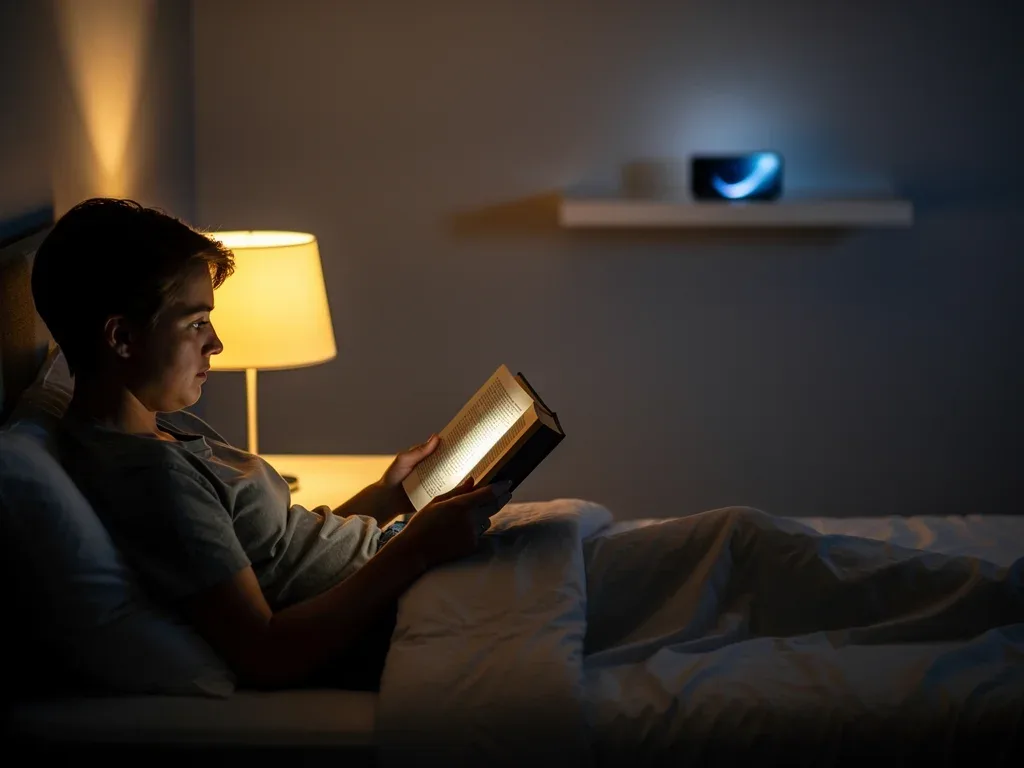
Consider a simple, battery-operated alarm clock that doesn't emit excessive light. Some models even offer gentle wake-up sounds or gradually increasing light to mimic a natural sunrise. The key is to find a device that performs the essential function of waking you up without introducing any digital distractions into your sleep environment.
This swap not only helps you avoid late-night scrolling but also sets a healthier tone for your morning. Instead of immediately diving into your phone, you can wake up more gradually, allowing your mind to ease into the day without the immediate onslaught of digital information. It’s a powerful move toward regaining control over your sleep and your mornings.
Swap 3: Introduce Calming Elements for a Restful Ambiance
Beyond removing distractions, actively introducing elements that promote relaxation can significantly enhance your ability to stop bedtime screen scrolling and improve your sleep. Your nightstand can become a hub of tranquility, preparing your mind and body for a deep, restorative rest.
Think about what naturally calms you. For many, it's a combination of sensory experiences: soothing scents, gentle sounds, and a comfortable environment. Incorporating these into your nightstand setup can create an inviting atmosphere that encourages sleep.
Sensory Aids for Sleep
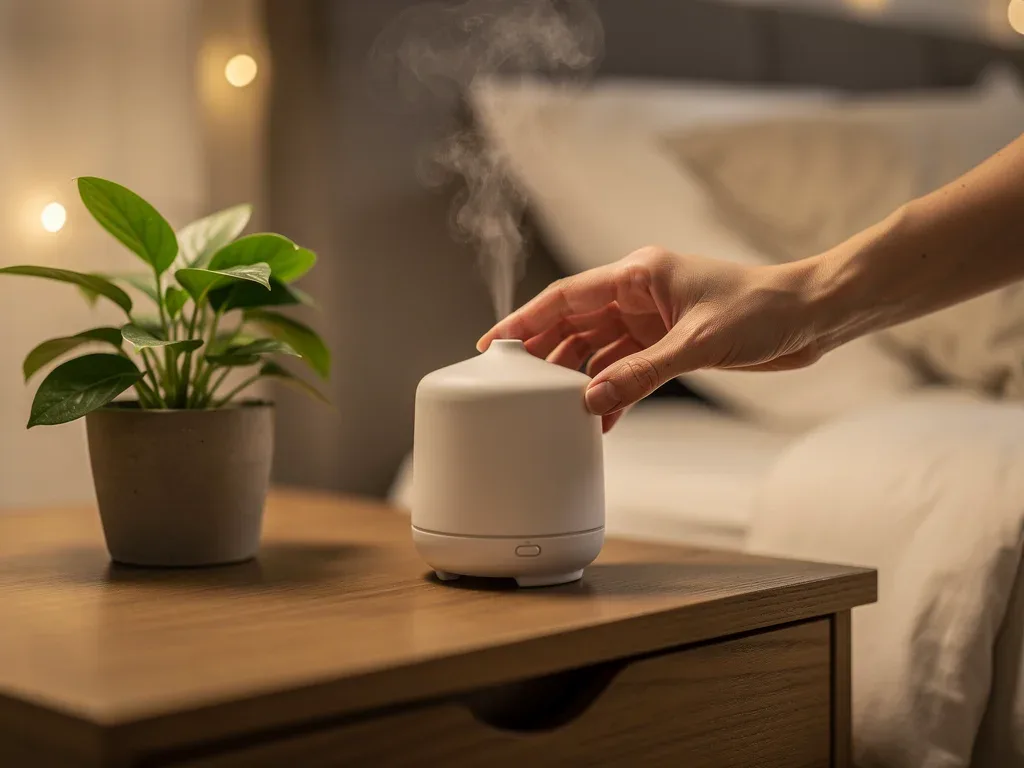
Consider adding an essential oil diffuser with calming scents like lavender, chamomile, or bergamot. These aromas can signal to your brain that it's time to relax, easing tension and promoting a sense of peace. Alternatively, a small, quiet white noise machine can block out disruptive external sounds, creating a consistent auditory environment conducive to sleep.
- Aromatherapy: Essential oil diffusers with calming scents like lavender promote relaxation.
- Sound Therapy: White noise machines can mask disruptive noises and create a peaceful environment.
- Warm Beverages: A cup of herbal tea (chamomile, valerian root) can be a comforting pre-sleep ritual.
- Journaling: A small notebook and pen can help process thoughts and reduce mental clutter before bed.
Another excellent addition is a journal and pen. If your mind races with thoughts, worries, or to-do lists, jotting them down before bed can be a powerful way to clear your head. This practice allows you to externalize your thoughts, preventing them from swirling in your mind as you try to sleep. It provides a constructive outlet for mental activity that might otherwise keep you scrolling or staring at the ceiling.
Finally, consider a warm, non-caffeinated beverage. A cup of herbal tea can be a soothing ritual, warming your body and signaling that it's time to wind down. The warmth and the act of sipping can be incredibly relaxing, providing a gentle transition from your active day to a restful night.
By intentionally curating your nightstand with these calming elements, you create an environment that actively supports sleep. These additions serve as positive cues, retraining your brain to associate your bedroom with peace and rest, making it easier to resist the urge to engage with screens.
Implementing Your New Nightstand Routine
Making these nightstand swaps is only the first step. The true challenge lies in consistently implementing your new routine. Breaking old habits and forming new ones requires patience, discipline, and a clear understanding of your goals. The objective is not just to replace items but to fundamentally change your relationship with your bedtime environment.
Start by setting a strict "digital curfew." This means deciding on a specific time each evening when all screens (phones, tablets, laptops, TVs) are turned off or put away. For optimal sleep, aim for at least 60-90 minutes before your desired bedtime. During this period, engage only in screen-free activities that promote relaxation, such as reading, listening to music, meditating, or journaling.
Strategies for Success
Physical separation from your phone is key. If you use your phone for work or emergencies, keep it in another room, perhaps charging, so it's accessible but not within arm's reach. You might even consider using an old-fashioned landline for emergencies if you're concerned about being completely unreachable. This deliberate distance helps to reinforce the boundary between your digital life and your sleep space.
- Establish a Digital Curfew: Power down all screens 60-90 minutes before bed.
- Create a Charging Station Away from the Bedroom: Designate a spot in another room for all devices.
- Communicate Your New Routine: Inform family and friends about your digital curfew to manage expectations.
- Be Patient and Persistent: Habit formation takes time; don't get discouraged by occasional slip-ups.
Another strategy is to make your bedroom a sanctuary. Ensure it's dark, quiet, and cool. Blackout curtains, earplugs, and a comfortable mattress can all contribute to a more conducive sleep environment. The less external stimulation your body receives, the easier it will be to wind down and fall asleep naturally.
Remember that consistency is paramount. It might feel awkward or even difficult at first, but with each night you successfully avoid screen scrolling, you reinforce the new habit. Over time, your body and mind will begin to associate your nightstand and bedroom with rest, making the transition to sleep much smoother and more effective.
The Broader Impact of Better Sleep Hygiene
The decision to stop bedtime screen scrolling extends far beyond simply getting more hours of sleep. It's a foundational step towards improving your overall sleep hygiene, which in turn has a cascading positive effect on nearly every aspect of your life. Good sleep hygiene isn't just about the quantity of sleep, but also its quality and consistency.
When you consistently achieve 7-9 hours of high-quality sleep, your body and mind have adequate time to repair, consolidate memories, and regulate essential functions. This leads to a host of benefits that can transform your daily experience and long-term health.
Holistic Health Benefits
Improved sleep significantly boosts cognitive function, leading to better concentration, problem-solving skills, and decision-making during your waking hours. You'll find yourself more alert and productive, able to tackle tasks with greater efficiency and less mental fatigue. Your mood also benefits immensely; adequate sleep helps regulate emotions, reducing irritability and improving your resilience to stress.
- Enhanced Cognitive Function: Better memory, focus, and problem-solving abilities.
- Improved Mood Regulation: Reduced irritability, anxiety, and symptoms of depression.
- Stronger Immune System: A well-rested body is better equipped to fight off illness.
- Better Physical Health: Supports hormone regulation, weight management, and cardiovascular health.
- Increased Energy Levels: Sustained energy throughout the day without relying on stimulants.
Physically, better sleep strengthens your immune system, making you less susceptible to illness. It plays a crucial role in hormone regulation, which impacts everything from appetite and metabolism to stress response. Consistent, quality sleep also contributes to better cardiovascular health and can aid in weight management by regulating hunger hormones like ghrelin and leptin.
By prioritizing a screen-free bedtime routine, you're not just avoiding a bad habit; you're actively investing in your physical and mental well-being. This commitment to better sleep hygiene creates a virtuous cycle, where improved rest leads to better health, which in turn makes it easier to maintain healthy habits. Embrace these changes, and watch as your entire life benefits from the power of truly restorative sleep.
Beyond the Nightstand: Holistic Approaches to Restful Sleep
While the nightstand swaps are crucial for helping you stop bedtime screen scrolling, achieving truly restorative sleep often requires a more holistic approach. Integrating these nightstand changes with broader lifestyle adjustments can amplify their effectiveness and solidify your journey towards consistent, high-quality rest. Think of your nightstand as the front line, but your entire daily routine contributes to your sleep success.
Consider your daily caffeine and alcohol intake. While a morning coffee can be a pleasant ritual, consuming caffeine too late in the day can significantly interfere with your ability to fall asleep. Similarly, alcohol, though it may initially make you feel drowsy, disrupts sleep architecture, leading to fragmented and less restorative sleep later in the night. Being mindful of when and how much you consume these substances can make a big difference.
Daytime Habits for Nighttime Rest
Regular physical activity is another powerful tool for improving sleep, but timing is important. Exercising earlier in the day can promote deeper sleep, while intense workouts too close to bedtime might be too stimulating. Aim for moderate activity during daylight hours, which helps regulate your circadian rhythm and expend energy naturally.
- Consistent Sleep Schedule: Go to bed and wake up at the same time every day, even on weekends.
- Daylight Exposure: Get natural light, especially in the morning, to reinforce your body's clock.
- Mindful Eating: Avoid heavy meals close to bedtime; opt for lighter, easily digestible snacks if needed.
- Stress Management: Incorporate relaxation techniques like meditation or deep breathing into your day.
Creating a consistent sleep schedule is perhaps one of the most impactful holistic changes you can make. Going to bed and waking up at roughly the same time every day, even on weekends, helps to regulate your internal clock. This consistency trains your body to anticipate sleep and wakefulness, making the transition much smoother.
Furthermore, managing stress throughout the day can prevent it from spilling over into your bedtime. Incorporate stress-reducing activities like meditation, yoga, or simply spending time in nature. The less mental clutter and emotional tension you carry into the evening, the easier it will be for your nightstand swaps to work their magic. By addressing both your immediate sleep environment and your broader lifestyle, you create an optimal foundation for truly restorative sleep.
| Key Swap | Benefit for Sleep |
|---|---|
| Phone with Book | Reduces blue light exposure and mental stimulation, promoting faster sleep onset. |
| Phone Alarm with Analog Clock | Eliminates late-night phone temptation and creates a digital-free sleep zone. |
| Add Calming Elements | Introduces aromatherapy, soothing sounds, or journaling to foster relaxation. |

Frequently Asked Questions About Screen-Free Sleep
Why is blue light from screens so harmful for sleep?▼Blue light emitted by electronic screens suppresses melatonin production, the hormone that regulates your sleep-wake cycle. This tricks your brain into thinking it's still daytime, making it harder to fall asleep and disrupting your natural circadian rhythm, leading to poorer sleep quality and potential insomnia.
How long before bed should I stop using screens?▼Experts recommend stopping all screen use at least 60 to 90 minutes before your intended bedtime. This allows your brain enough time to wind down, increase melatonin production, and prepare your body for sleep without digital stimulation, significantly improving your chances of falling asleep faster.
What are good alternatives to screen scrolling before sleep?▼Excellent screen-free alternatives include reading a physical book, listening to calming music or a podcast, journaling to process thoughts, meditating, taking a warm bath, or engaging in light stretching. These activities promote relaxation and signal to your body that it's time to prepare for rest.
Will an analog alarm clock really make a difference?▼Yes, an analog alarm clock can make a significant difference. It removes the primary reason for keeping your phone on your nightstand, eliminating the temptation to check notifications or scroll. This physical separation helps create a digital-free zone, fostering a more peaceful and undistracted sleep environment, leading to better sleep hygiene.
Can essential oils truly help with sleep?▼Certain essential oils, particularly lavender, chamomile, and bergamot, are known for their calming and sedative properties. Used in a diffuser, they can create a soothing atmosphere, reduce anxiety, and promote relaxation, making it easier to fall asleep and experience deeper rest. They are a great addition to a screen-free bedtime routine.
Conclusion
The quest to stop bedtime screen scrolling is more than just breaking a bad habit; it's an investment in your overall health and well-being. By implementing these three simple nightstand swaps – replacing your phone with a physical book, embracing an analog alarm clock, and introducing calming elements – you actively reclaim your sleep sanctuary. These changes, coupled with a broader commitment to healthy sleep hygiene, will significantly reduce blue light exposure, minimize mental stimulation, and foster an environment conducive to deep, restorative rest. The benefits extend far beyond just feeling less tired; you'll experience improved cognitive function, better mood regulation, a stronger immune system, and enhanced physical health. Make the conscious choice to prioritize your sleep, and you'll unlock the transformative power of eight full hours of uninterrupted, quality rest, fundamentally improving your daily life.
