AI Search Engines & Social Discovery: 24% Drop in Clicks
Advertisements
Generative AI search engines are significantly altering how users discover content, evidenced by a 24% drop in external link clicks, profoundly impacting traditional social discovery mechanisms and content strategies.
The digital landscape is undergoing a seismic shift. For years, social media platforms reigned supreme as primary conduits for content discovery, driving traffic and shaping trends. However, a new titan has emerged: generative AI search engines. Recent data indicates a significant 24% drop in external link clicks, raising a critical question: are generative AI search engines killing social discovery as we know it? This analysis delves into the unfolding dynamics, examining how AI is reshaping user behavior and what it means for content creators, marketers, and the future of online interaction.
The Rise of Generative AI in Search
Generative AI has rapidly evolved from a niche technological curiosity to a mainstream tool, fundamentally altering how users interact with information online. These advanced systems, powered by large language models, are designed to understand complex queries and generate comprehensive, coherent answers directly within the search interface. This capability marks a significant departure from traditional search engines, which primarily served as directories, pointing users to external websites for information.
The allure of generative AI lies in its promise of efficiency and immediate gratification. Users can receive synthesized information without needing to navigate multiple links, read through various articles, or piece together disparate facts. This streamlined experience is particularly appealing in a fast-paced digital environment where time is a premium. As these AI-powered search experiences become more sophisticated and ubiquitous, they naturally draw more user attention and engagement, potentially at the expense of traditional content consumption patterns.
Shifting User Expectations
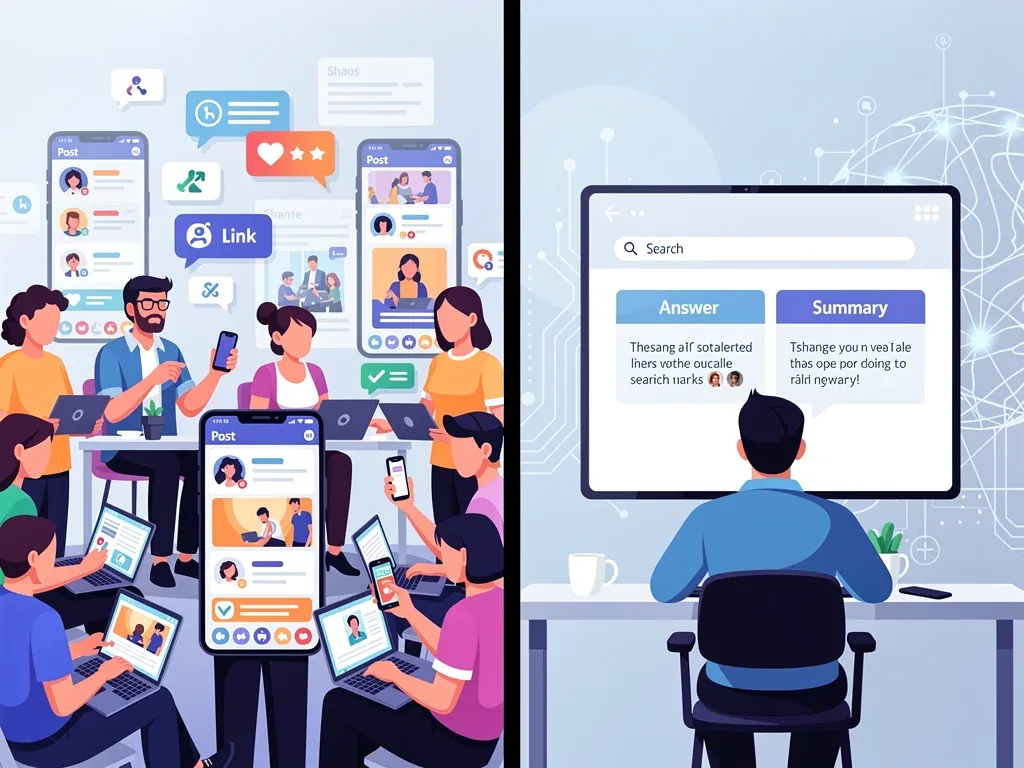
The introduction of generative AI has recalibrated user expectations regarding information retrieval. No longer content with a list of links, users now anticipate direct answers and contextual summaries. This shift is profound, moving from a 'search and click' paradigm to a 'query and receive' model.
- Instant Answers: AI provides immediate, synthesized responses.
- Reduced Navigation: Less need to browse multiple websites.
- Personalized Content: AI can tailor responses to individual user history and preferences.
- Enhanced Efficiency: Quicker access to desired information.
This convenience, while beneficial for users, poses a direct challenge to the established ecosystem of content creation and distribution. If users find answers directly within the search engine, their motivation to click external links diminishes significantly. This behavioral change is at the heart of the observed decline in external link clicks, impacting how content is discovered and consumed.
The integration of generative AI into search has undeniably ushered in a new era of information access. While offering unparalleled convenience and efficiency for users, it simultaneously introduces complex challenges for content providers and platforms that have historically relied on external clicks for visibility and revenue. Understanding this foundational shift is crucial to comprehending the broader implications for social discovery.
Decoding the 24% Drop in External Link Clicks
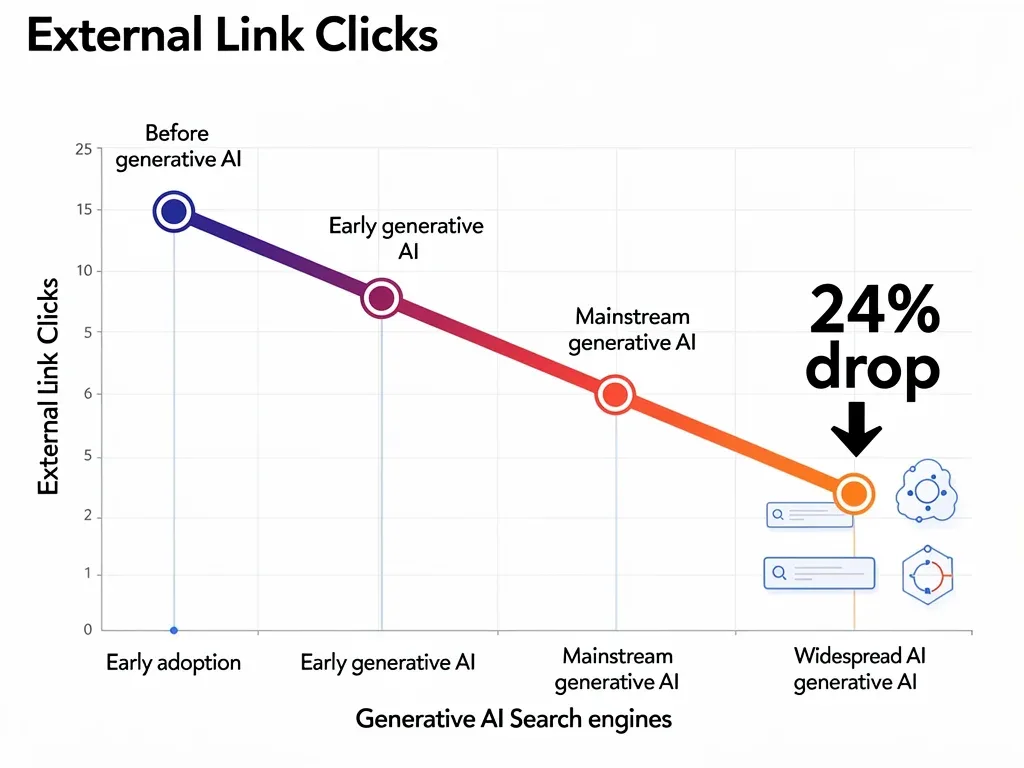
The reported 24% drop in external link clicks is a stark indicator of a significant change in how users interact with online content. This statistic is not merely a number; it represents a tangible shift in user behavior, directly attributable to the increasing prevalence and sophistication of generative AI search engines. For years, the internet operated on a model where search engines acted as gateways, directing users to websites where content resided. Social media platforms amplified this, creating vast networks for sharing and discovering links.
However, AI's ability to provide comprehensive answers within the search results page itself fundamentally alters this dynamic. Users are increasingly finding what they need without leaving the search environment. This internal resolution of queries means fewer clicks on outbound links, impacting everything from news articles and blog posts to e-commerce sites and informational resources.
Implications for Content Creators and Publishers
For content creators and publishers, this decline is a critical concern. Their business models often rely heavily on page views, ad impressions, and direct traffic from search engines and social media. A substantial reduction in external link clicks translates directly into decreased visibility, lower ad revenue, and diminished opportunities for audience engagement.
- Reduced Traffic: Fewer clicks mean less organic traffic to websites.
- Lower Ad Revenue: Ad-supported sites suffer from fewer impressions.
- Diminished Engagement: Less direct interaction with content and brands.
- SEO Challenges: Traditional SEO strategies may need re-evaluation.
The data suggests that the value proposition of simply creating content and hoping for clicks is eroding. Content providers must now contend with an environment where search engines are not just indexing information but actively synthesizing and presenting it. This forces a re-evaluation of how content is created, optimized, and distributed to remain relevant and discoverable in an AI-dominated search landscape.
The 24% drop in external link clicks serves as a wake-up call for the entire digital ecosystem. It highlights an urgent need for adaptation and innovation, pushing stakeholders to rethink their strategies for engaging audiences and sustaining their digital presence in an era where AI is increasingly mediating access to information.
Social Discovery's Shifting Landscape
Social discovery, traditionally defined by the organic sharing and recommendation of content across social networks, is experiencing a profound transformation. For over a decade, platforms like Facebook, Twitter, and Instagram have been instrumental in how individuals encounter news, articles, products, and entertainment. Friends, influencers, and community groups acted as curators, pushing relevant content into users' feeds and driving clicks to external sources.
However, the rise of generative AI search engines introduces a new, powerful layer of content discovery that operates differently. Instead of relying on social connections to filter and present information, AI offers a personalized, often more direct, path to answers. This doesn't mean social discovery is dead, but rather that its role and mechanisms are evolving.
AI's Influence on Content Virality
The traditional virality model often started with a compelling piece of content shared by an individual, then amplified through their network, leading to a cascade of shares and clicks. Generative AI disrupts this by potentially satisfying the initial information need directly, bypassing the social sharing loop.
- Direct Answers vs. Shared Links: AI provides solutions, reducing the need for users to seek external validation or information.
- Reduced 'Click-Through' Motivation: If an AI summary is sufficient, why click the original link?
- Algorithmic Curation: AI search engines are becoming powerful curators themselves, potentially overshadowing social algorithms for certain types of queries.
This shift implies that content designed purely for social sharing might face tougher competition for attention. The immediate utility offered by AI could diminish the perceived value of clicking a shared link, especially for informational queries. Social platforms may need to pivot towards more experiential, community-driven content that AI cannot easily replicate or summarize.
Ultimately, social discovery is not disappearing but is being redefined. It will likely continue to thrive for emotionally resonant content, community building, and personal interactions, but its role as a primary driver of external informational clicks is clearly being challenged by the efficiency of generative AI search. Adaptability will be key for platforms and creators in this evolving landscape.
The Economic Impact on Digital Ecosystems
The 24% drop in external link clicks driven by generative AI search engines carries significant economic implications for the entire digital ecosystem. This decline directly affects the revenue streams of countless businesses that rely on website traffic for advertising, subscriptions, or direct sales. Publishers, content creators, e-commerce sites, and even smaller blogs are feeling the pinch as their primary source of inbound traffic diminishes.
Advertisers, who typically pay for impressions or clicks on external websites, might find their traditional channels less effective. This could lead to a reallocation of advertising budgets towards platforms and formats that are more aligned with AI-driven content consumption, such as in-SERP (Search Engine Results Page) advertising or new AI-integrated ad models. The ripple effect extends to ad tech companies, content management systems, and web analytics providers, all of whom must adjust to this new reality.
Rethinking Monetization Strategies
In response to these changes, businesses are compelled to rethink their monetization strategies. The old model of generating traffic and monetizing through display ads is becoming increasingly fragile. New approaches are emerging, focusing on deeper engagement and direct value creation within the AI-dominated search environment.
- Subscription Models: Emphasizing exclusive, in-depth content that AI summaries cannot fully replace.
- Direct-to-Consumer: Building stronger brand loyalty and direct relationships with audiences.
- Value-Added Services: Offering premium tools, courses, or consulting beyond free content.
- API Integration: Providing content directly to AI models or search engines through structured data.
The economic pressure is forcing innovation. Companies that can adapt quickly, either by creating content that AI can't easily summarize or by finding ways to monetize within the AI search environment, will be better positioned to thrive. Those clinging to outdated models risk becoming obsolete as traffic patterns continue to shift.
The economic impact is far-reaching, transforming how digital content is valued, distributed, and monetized. This era demands strategic agility and a willingness to explore new business models that align with the evolving landscape of information discovery, ensuring sustainability in an AI-powered world.
Adapting to the AI-Driven Discovery Era
The shift caused by generative AI search engines is not merely a challenge but also an opportunity for innovation. Adapting to this new AI-driven discovery era requires a fundamental re-evaluation of content strategy, SEO practices, and audience engagement. It's no longer enough to simply produce content; creators and businesses must now consider how that content interacts with AI systems and how it can still drive value in a world of direct answers.
The key lies in understanding what AI can and cannot do effectively. While AI excels at summarizing facts and providing concise answers, it often struggles with nuanced opinions, subjective experiences, and deeply investigative journalism. Content that offers unique perspectives, original research, or fosters genuine community interaction will likely retain its value and discoverability.
Strategies for Content Creators and Marketers
To thrive in this evolving landscape, content creators and marketers must adopt multi-faceted strategies that account for AI's influence. This involves optimizing for both traditional search and AI-driven queries, while also exploring new avenues for engagement.
- Semantic SEO: Focus on topic authority and comprehensive coverage rather than just keywords.
- E-E-A-T Emphasis: Build demonstrable experience, expertise, authoritativeness, and trustworthiness.
- Unique Value Proposition: Create content that offers deep insights, original data, or human perspective that AI cannot easily replicate.
- Community Building: Foster direct relationships with audiences through newsletters, forums, or exclusive platforms.
- Diversify Traffic Sources: Reduce reliance on single channels by exploring email marketing, podcasts, video, and direct engagement.
- Structured Data: Implement schema markup to help AI understand and integrate content effectively.
Furthermore, understanding the intent behind user queries is more crucial than ever. If a query seeks a quick fact, AI will likely provide it. If it seeks a solution, an opinion, or a deeper understanding, there's still a strong opportunity for human-generated content to shine. Content creators should aim to provide value beyond simple information retrieval, offering experiences and perspectives that encourage users to seek out the source.
The AI-driven discovery era demands agility, creativity, and a strategic shift from pure information provision to value creation. By embracing these changes and focusing on unique, high-quality content, creators can navigate the evolving digital landscape and maintain relevance in the age of generative AI.
The Future of Social Connection and Information Access
As generative AI search engines continue to reshape how we access information, the future of social connection and content discovery remains a dynamic and evolving narrative. The 24% drop in external link clicks is not the end of social discovery, but rather a catalyst for its transformation. Social platforms will likely need to re-evaluate their core value propositions, moving beyond mere link sharing to foster deeper, more meaningful interactions and community building.
The human need for connection, shared experiences, and trusted recommendations will persist, even as AI becomes more proficient at delivering facts. Social media might pivot to emphasize authentic storytelling, live experiences, niche communities, and direct creator-to-fan engagement. The content that thrives will be that which fosters emotional resonance, drives discussion, and builds identity, areas where AI currently has limitations.
Balancing Efficiency and Engagement
The challenge for the digital ecosystem will be to find a balance between the efficiency offered by AI and the rich, often serendipitous, engagement provided by social discovery. Search engines may evolve to integrate social signals more intelligently, or social platforms might develop new ways to present content that complements AI-driven search results, rather than competing directly with them.
- Hybrid Discovery Models: Integrating AI summaries with socially curated content.
- Niche Communities: Growth of platforms focused on specific interests and deeper interactions.
- Creator Economy Focus: Greater emphasis on direct support for content creators.
- Authenticity and Trust: Increased value placed on human-validated and trustworthy sources.
Ultimately, the digital future will likely be a hybrid one, where AI and social discovery coexist, each playing distinct yet complementary roles. AI will serve as the ultimate information concierge, providing quick answers and efficient data retrieval. Social platforms, on the other hand, will continue to be the heart of human connection, shared experiences, and the discovery of content that resonates on a personal and emotional level.
Understanding these evolving dynamics is crucial for anyone navigating the internet. The future isn't about one form of discovery replacing another entirely, but about how these powerful forces will integrate and redefine our online experiences, making both information access and social connection richer and more diverse.
| Key Point | Brief Description |
|---|---|
| 24% Click Drop | Generative AI search engines have led to a significant decline in external link clicks. |
| AI's Role in Search | AI provides direct answers, reducing the need for users to navigate to external sites. |
| Impact on Publishers | Content creators face reduced traffic, lower ad revenue, and challenges to traditional SEO. |
| Adapting Strategies | Businesses must focus on unique content, E-E-A-T, and diversify traffic sources to thrive. |
Frequently Asked Questions About AI and Social Discovery
Are generative AI search engines entirely replacing social media for content discovery?▼No, not entirely. While AI search engines significantly impact informational content discovery by providing direct answers, social media continues to be crucial for experiential, community-driven, and emotionally resonant content. The landscape is shifting towards a hybrid model rather than a complete replacement.
What does the 24% drop in external link clicks signify?▼This drop indicates a substantial change in user behavior, where a significant portion of users now find their answers directly within AI-powered search results. It means fewer users are navigating to external websites for information that AI can synthesize, affecting traffic and monetization for publishers.
How can content creators adapt to this new AI-driven discovery environment?▼Creators should focus on producing high-quality, unique content that offers deep insights, original research, or human perspectives. Emphasizing E-E-A-T (Experience, Expertise, Authoritativeness, Trustworthiness) and diversifying traffic sources beyond traditional search and social are also key strategies.
Will AI search engines lead to the demise of traditional SEO?▼Traditional SEO is not dying, but evolving. Strategies must adapt from solely optimizing for clicks to optimizing for AI understanding and direct answers. Semantic SEO, structured data, and building topic authority become even more critical to ensure content is discoverable and utilized by AI models.
What are the economic consequences for businesses relying on web traffic?▼Businesses face reduced ad revenue, lower affiliate commissions, and diminished direct sales if they solely depend on external link clicks. This necessitates exploring new monetization models like subscriptions, direct-to-consumer sales, and value-added services that don't rely on outbound traffic from search.
Conclusion
The emergence of generative AI search engines marks a pivotal moment in the evolution of online content discovery. The documented 24% drop in external link clicks is not merely a statistic; it's a profound indicator of a shifting paradigm where immediate, AI-synthesized answers are increasingly preferred over traditional navigation to external sites. This transformation challenges long-standing digital business models and forces content creators, publishers, and social platforms to rethink their strategies. While social discovery, particularly for emotional and community-driven content, will continue to thrive, its role as a primary driver for informational clicks is undeniably diminished. The future demands adaptability, a focus on unique human-centric value, and a strategic embrace of both AI's efficiency and the enduring power of genuine social connection to navigate this new era successfully.
